
Separate bank-cheque claims from Boku payment evidence
 Available in US
A clear distinction between cheque acceptance and phone-bill deposits, including Boku’s deposit-only role at online casinos.

What the available payment evidence actually covers
A bank-cheque deposit and a Pay by Phone deposit are different payment routes. A cheque is a banking instrument; Boku charges a casino deposit to a mobile phone account or prepaid balance. Evidence about one does not establish that a casino accepts the other. That distinction matters when assessing claims about online casino sites that accept bank cheques in the UK: a list or description centred on Boku cannot confirm cheque acceptance.
Boku is relevant to the payment picture because it is a deposit method used at some online casinos. Its role is limited: it can put money into a casino account, but it cannot receive casino withdrawals. That makes it a poor substitute for a bank cheque if the intended requirement is to move funds both into and out of a gambling account through the same route.
Payment terms are easiest to compare when each method is identified by what it actually does. A cheque is not another name for a phone-bill payment, and a phone-bill payment is not evidence of a cheque facility. The presence of a cashier option for one method does not imply that another is accepted. Search results and payment summaries can group several deposit methods together, but the grouping does not make them interchangeable.
Bank-cheque availability can vary, so check an operator’s current payment terms before choosing a casino. The listed payout speed is a useful detail to consider, but it does not confirm that bank cheques are accepted.
-
Zombillion
- Payout speed
- 1-3 business days
Zombillion has a listed payout speed of 1–3 business days. This timing is not confirmation of bank-cheque availability.
-
WinBeast
- Payout speed
- 1-3 business days
WinBeast has a listed payout speed of 1–3 business days. This timing is not confirmation of bank-cheque availability.
-
x3bet
- Payout speed
- 1-3 business days
x3bet has a listed payout speed of 1–3 business days. This timing is not confirmation of bank-cheque availability.
-
SlotoSport
- Payout speed
- 1-3 business days
SlotoSport has a listed payout speed of 1–3 business days. This timing is not confirmation of bank-cheque availability.
-
NightWin
- Payout speed
- 1-3 business days
NightWin has a listed payout speed of 1–3 business days. This timing is not confirmation of bank-cheque availability.
-
Revery Play
- Payout speed
- 1-3 business days
Revery Play has a listed payout speed of 1–3 business days. This timing is not confirmation of bank-cheque availability.
-
Amunbet
- Payout speed
- 1-3 business days
Amunbet has a listed payout speed of 1–3 business days. This timing is not confirmation of bank-cheque availability.
-
BeOnBet
- Payout speed
- 1-3 business days
BeOnBet has a listed payout speed of 1–3 business days. This timing is not confirmation of bank-cheque availability.
-
Britsino
- Payout speed
- 1-3 business days
Britsino has a listed payout speed of 1–3 business days. This timing is not confirmation of bank-cheque availability.
-
SpinFormula
- Payout speed
- 1-3 business days
SpinFormula has a listed payout speed of 1–3 business days. This timing is not confirmation of bank-cheque availability.
The distinction also affects what a casino’s payment information can answer. A page describing Boku tells the reader about a mobile-based deposit route. It does not, by itself, establish whether the casino accepts a cheque, how a cheque would be handled, or whether cheque deposits are available to UK customers. Those are separate questions, and they need a cheque-specific statement from the operator rather than an inference from a different payment method.
The phrase “online casino deposit by bank cheque” can also be confused with other bank-related routes. A bank transfer, a debit-card payment and a cheque are not the same instrument, even if each connects a gambling account with a bank in some way. A casino that names one of those options has not thereby confirmed the others. Payment descriptions should therefore be read literally: the named method is the method the description supports.
For someone comparing the best online casinos that accept bank cheques in the UK, the useful distinction is not a ranking but the payment evidence behind each claim. A casino’s general payment page may list several methods without saying that every method is available to every customer or account. A Boku listing supports only a claim about Boku. It cannot be used as proof that a bank-cheque deposit is accepted, nor can the existence of a Boku option establish a cheque deposit process.
 Casinos That Accept E-Cheques in the UKLearn how to verify e-cheque availability in your account, distinguish cashier listings from general payment claims, and check deposit and withdrawal terms.
 Casinos That Accept Solana in the UK: What to VerifyLearn what payment evidence can establish and why Solana acceptance and bonus eligibility depend on operator terms; one review describes a 100%…
The same applies to phrases such as “cheque deposit” in a casino context. The word may appear in material about payments, withdrawals or account funding, but its placement matters. A method described for withdrawals is not automatically an available deposit method. Conversely, a deposit method does not become a withdrawal route simply because both concern money moving between a casino and a customer. Boku makes this limitation especially clear: it is for deposits only.
A sound comparison therefore keeps the payment method and its function separate. Boku belongs in the discussion of Pay by Phone deposits. Bank cheques belong in a cheque-specific assessment. The two categories should not be blended to fill gaps in a payment list, and a casino should not be described as accepting cheques merely because it accepts Boku or another mobile payment method.
This is a narrower basis for evaluating claims than a broad list of casino payment options, but it is also more useful. A site may offer several ways to fund an account, yet only a method named specifically as a bank cheque supports a claim about cheque acceptance. Boku information answers a different question: whether a phone-based deposit route is available, and what its basic function is. It does not answer the cheque question.
Any claim about a bank-cheque option needs to stand on its own, with the operator identifying that method directly. A mobile-phone deposit cannot be counted as a cheque facility by changing the label; the payment route remains what it is.
A Boku deposit, from cashier to phone bill
Boku is a Pay by Phone transaction, not a bank-cheque payment. Its route runs from the casino cashier to a mobile number, with the resulting charge assigned to the phone account. A casino showing Boku in its payment options is therefore showing a phone-based deposit route; that does not establish that it accepts cheques.
The transaction starts in the casino cashier. Boku is selected as the deposit method, an amount is entered, and the mobile number is supplied. The payment then requires confirmation through a verification code sent by SMS. Until that code is entered, the payment has not completed its stated confirmation step. The phone is part of the payment process, not merely a device used to access the casino.
That sequence separates the casino-side instruction from the mobile-side confirmation. The cashier records the selected method, amount and number; the SMS code confirms the transaction. A number entered incorrectly can interrupt that process, because the confirmation is sent to the number supplied. The exact screens and wording can vary between casino cashiers, but the core sequence remains selection, amount, number and SMS verification.
After confirmation, the charge is routed to the mobile account rather than paid from a bank cheque. For a contract customer, the Boku amount is added to the mobile phone bill. The casino deposit and the phone bill are separate records of the same payment: one shows funds entering the gambling account, while the other shows the charge associated with mobile service.
 Casinos That Accept E-Checks in the UKLearn how to verify e-check availability in an account’s cashier, distinguish it from a bank transfer, and check deposit terms before paying.
 Casinos That Accept Tether in the UK: Payment ChecksCheck whether USDT appears in the live deposit cashier, how account settings affect availability, and why general payment pages are not confirmation.
For a PAYG customer, the amount is deducted from prepaid credit instead of appearing on a monthly bill. That changes where the cost is recorded, not the basic cashier sequence. In either case, the payment is tied to the mobile account used for the transaction. The practical distinction is between a billed account and prepaid credit; neither should be confused with a cheque clearing through a bank.
The payment flow can be understood as three linked stages: a deposit request in the casino cashier, confirmation on the mobile number by SMS, and accounting through the phone service. The casino cashier is where the amount and number are entered. The SMS is the confirmation mechanism. The mobile account is where the charge ultimately lands. That division matters when reviewing a transaction: a casino deposit entry and a mobile-billing entry may describe the same movement from different sides.
A bank cheque works through a different payment instrument and process. Nothing in the Boku sequence turns a phone-bill charge into cheque acceptance, and the presence of a cashier option labelled Boku should not be read as confirmation that the casino handles cheques. The distinction is simple but commercially relevant: the deposit is authorised through a mobile number and charged through the mobile account.
Boku Deposit Process
-
1
Selection
Choose Boku in the casino cashier, enter the deposit amount, and provide your mobile number.
-
2
Verification
Receive a confirmation code via SMS on the supplied mobile number and enter it into the cashier.
-
3
Accounting
The charge is routed to the mobile account, appearing on a monthly bill for contract customers or deducted from prepaid credit for PAYG users.
The SMS step also means that access to the relevant phone number is required at the point of payment. The confirmation code is sent there, so the transaction depends on being able to receive and enter it. This is a functional part of the payment route, not an optional notification. If confirmation is not completed, the stated process has not reached its final verification stage.
The resulting charge is therefore not a cash withdrawal from a bank account or a cheque deposit. It is a casino deposit paid through the mobile service, either as an item on a monthly bill or as a deduction from PAYG credit. Those are the two billing outcomes; the cashier steps preceding them are the same. The distinction between the payment source and the casino balance is useful when checking records: the casino account reflects the deposit, while the phone account carries the charge.
This is the transaction mechanics in full: choose Boku in the cashier, enter the deposit amount and mobile number, confirm with the SMS code, then account for the cost through the phone service. It describes Pay by Phone only. It does not describe a bank-cheque deposit, and the two methods should not be treated as interchangeable.
The UK licensing framework behind casino payments
A casino’s payment menu and its legal status are separate matters. A bank-cheque option, if offered, would describe how money reaches an account; it would not establish that the casino is authorised to serve customers in Great Britain. That status depends on the operator’s licence, not on the payment method displayed at the cashier.
 Casinos That Accept Neosurf in the UK: DepositsLearn how to check Neosurf availability, assess bonus eligibility from payment-method terms, and understand why a deposit does not guarantee a matching…
 Casinos That Accept Bitcoin in the UK: Fees & TermsCompare casino, provider, bank, exchange-rate and network costs, and see why a Bitcoin Cash listing does not confirm Bitcoin acceptance.
The UK Gambling Commission oversees gambling activity in the United Kingdom, including online casino gambling. For commercial gambling in Great Britain, it is the sole regulator. Its remit for remote gambling is tied to the market being served: an operator offering remote gambling to consumers in Great Britain falls within the licensing framework even when the equipment used to provide the service is located elsewhere.
The distinction between the operator and the people who run it is reflected in the licences issued. Businesses conducting gambling operations require an operating licence. Individuals who perform regulated roles in those operations may require personal licences. These are different authorisations: an individual’s licence does not replace the business’s operating licence, and a company’s authorisation is not a personal licence for its staff.
This matters when assessing any casino associated with bank-cheque payments. A payment description, a casino’s own claims, or the availability of a particular deposit route cannot substitute for checking the operator’s status. The relevant question is whether the business serving Great Britain holds a current UK Gambling Commission operating licence for its activity. The Commission’s public register is the place to verify the licence number before funds are deposited.
The legal framework concerns the gambling service, rather than the location of a server or payment processor. Moving key equipment outside Great Britain does not, by itself, remove a remote operator serving Great Britain consumers from the Commission’s licensing requirements. Nor does a payment route create a separate category of authorisation: the operator remains responsible for holding the relevant licence.
The Gambling Act 2005 governs gambling in England, Wales and Scotland, but not Northern Ireland. Accordingly, references to the Commission’s role in Great Britain should not be read as a description of the same statutory framework across every part of the United Kingdom. Within Great Britain, however, commercial gambling is subject to the Commission’s oversight, and remote operators serving consumers there must be licensed.
For someone comparing casinos that claim to accept cheques, the licence check is a threshold test, not a verdict on the payment option. It confirms whether the operator is authorised within the relevant market; it does not confirm that a cheque is accepted, how a deposit is processed, or what terms apply to it. Those details depend on the operator’s current cashier and conditions. Separating the two checks avoids treating a payment facility as evidence of regulatory status, or a licence as evidence that a particular payment method is available.
Boku deposit limits and the amounts that fit
Boku deposit figures do not resolve into one consistent set of limits. Specialist casino reviews report different transaction caps, and the distinction matters: a per-transaction ceiling applies to each individual payment, while a daily ceiling applies to the total charged through the mobile network over a day. A figure for one is not a substitute for the other.
One specialist review describes £30 as the standard maximum for a single UK deposit, with some casinos or network operators permitting £40 or £50. Other specialist reviews give a lower transaction figure: around £10 per payment, alongside a £30 daily network limit. A further account gives the £30 daily limit but specifies no per-transaction cap. These reports conflict on the transaction ceiling; they should not be combined into a single supposed market rule.
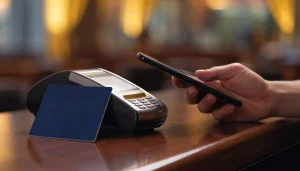
The practical distinction is between what the casino cashier allows and what the mobile network will process. A casino can set the amount accepted for one deposit, but specialist reporting attributes the daily Boku ceiling to the mobile operator rather than the casino. Where that account applies, several individually accepted deposits could still meet the network’s daily limit. The operator may also set a lower ceiling, so a stated network allowance does not establish what a particular cashier will accept.
The reported daily figure is £30, but it should be treated as a reported limit, not a universal guarantee. The available accounts disagree about whether there is also a fixed transaction cap and how high it may be. The amount available in practice therefore depends on the limits applying to the specific casino and mobile network. A limit displayed in the cashier is more relevant to that deposit than a figure quoted as a general guide.
The permitted increments add a separate constraint. A specialist review says Boku payments must be divisible by ten, listing £10, £20 and £30 as eligible amounts. On that account, an amount such as £15 would not fit the required increment, even if it fell below a stated maximum. The same review’s examples should not be read as confirmation that every listed amount will be available at every casino: the transaction ceiling may be lower, or the cashier may apply its own range.
For a £30 ceiling, the reported increments would allow a single £30 payment, while a lower per-transaction cap would change the amount that can be sent at once. The conflicting reports mean that a £30 daily limit does not prove that one £30 transaction is permitted; it may instead be a total across smaller deposits. Likewise, reports of £40 or £50 transaction allowances do not establish that the daily network limit rises with them.
The figures are most useful when kept in their separate categories: an amount per deposit, a total per day, and the available increments. Treating any one figure as the complete limit can produce the wrong expectation. In particular, the higher transaction amounts appear in a specialist review as possible allowances at some casinos or networks, not as a standard available across UK Boku deposits.
PAYG balance and the withdrawal gap
For a pay-as-you-go (PAYG) customer, the phone balance is a funding constraint, not a casino withdrawal balance. A specialist review describes Boku deposits as limited by the credit remaining on the mobile account: if that balance cannot cover the requested charge, the deposit cannot exceed it. The amount available to spend through Boku is therefore tied to the phone account’s current credit.
That credit and the casino account balance are separate pots. A Boku payment charges the phone account or uses its prepaid credit to fund a casino deposit; it does not create a route for sending casino winnings back to the phone. Boku is deposit-only, so a balance built up at the casino cannot be withdrawn through the same method.

A separate withdrawal method is consequently part of the payment arrangement, not an optional detail to consider after a win. Players depositing with Boku must register another method, such as a debit card, e-wallet or bank transfer, for withdrawals. The casino’s cashier and account requirements determine which alternatives are available. The practical check is whether an alternative method is registered and usable before the Boku deposit is made.
This distinction also matters when the initial funding method is described loosely as a phone payment. A phone-bill charge is not a bank-cheque transaction: it does not show that a casino accepts cheques, nor does cheque wording establish that Boku is available. The routes have different mechanics. One draws from mobile credit or adds a charge to a phone bill; the other would need to be confirmed separately in the casino’s payment information.
For PAYG accounts, the immediate calculation is straightforward: the amount available through Boku cannot exceed the remaining phone credit, according to the specialist review. That does not settle how casino funds can later be paid out. The withdrawal route has to be considered independently, and the relevant alternative must be supported by the casino.
A deposit method that accepts money but cannot receive withdrawals leaves the account dependent on that separate route. If no suitable alternative is in place, the phone balance may cover the deposit while the withdrawal arrangement remains unresolved. The two balances should not be treated as interchangeable.
Do
- Register a separate withdrawal method (e.g., debit card or e-wallet)
- Check phone credit balance before attempting a PAYG deposit
Don't
- Assume Boku can be used for withdrawals
- Treat the phone balance and casino balance as interchangeable
Bonus terms on pay-by-phone deposits
A payment option appearing in a casino cashier does not establish that a deposit qualifies for a welcome offer. Payment acceptance and bonus eligibility are separate conditions: the first concerns how funds reach the account; the second is governed by the promotion’s terms. Pay-by-phone deposits are commonly excluded from welcome offers, so the relevant terms need to be checked before a deposit is made.
The distinction matters because a promotion can be available to an account while a particular funding method is excluded. In that case, the deposit may be accepted without triggering the offer. The cost is not necessarily a separate charge; it may be the lost value of the bonus, or the loss of access to the promotion after the qualifying deposit has already been made. A cashier confirmation alone does not settle that question.
A specialist review confirms that MrQ, Duelz, Mr Vegas and Videoslots accept pay-by-phone deposits for bonus eligibility. That is a limited operator-specific finding, not a rule that applies across casinos or to every promotion those operators run. Eligibility can depend on the offer selected, so the terms attached to the actual promotion remain decisive even where a payment method has been reported as eligible.
Boku requires the same separation. A specialist review found no Boku-specific deposit restrictions on the platforms it assessed and reported that Boku deposits generally came without dedicated bonuses. Neither point establishes that every Boku deposit qualifies for a welcome offer. “No payment restriction” and “bonus-eligible” describe different conditions; treating them as interchangeable turns an uncertain return into an assumed one.

The useful calculation is therefore conditional: identify the promotion, read its payment-method exclusions, and count the bonus value only if the terms include the chosen Pay by Phone method. If the terms exclude it, the deposit remains a deposit but does not earn the advertised promotional benefit. If the wording is unclear, the expected bonus value should not be included in the budget until the operator confirms eligibility.
This check is separate from comparing promotion size or deciding whether a bonus is worth its conditions. The immediate question is narrower: does this specific funding method qualify for this specific offer? Without that answer, the displayed promotion is not part of the deposit’s confirmed value.
Why direct Boku availability has narrowed
Direct Boku deposits have become harder to find at UK-licensed casinos. A specialist review describes the remaining group as small and reports that its membership has declined since 2023. That is a change in operator payment choices, not evidence that every casino has removed Pay by Phone or that Boku has disappeared altogether.
The pattern reported since 2023 has three outcomes: an operator switches from Boku to another Pay by Phone service, removes phone-based deposits, or continues to offer Boku. Fonix and Siru Mobile are among the named replacements. For a player comparing payment options, those outcomes are not interchangeable. A casino may still accept payment through a mobile network while no longer processing deposits through Boku; another may offer no mobile-payment route at all.
Boku
A phone-based deposit service that has seen a decline in availability since 2023.
Fonix
A Pay by Phone alternative accepted by casinos such as MrQ and Duelz.
Siru Mobile
A mobile payment route supported by operators including Mr Vegas and Videoslots.
This distinction matters when checking a cashier. “Pay by Phone” describes a broader payment category, whereas Boku is a particular service within it. A general reference to phone billing therefore does not confirm that Boku itself is available. The payment methods displayed by an operator are the relevant evidence for its current offer; an older description may reflect an earlier cashier arrangement.
The shift is reported as an operator-level response to compliance risk, rather than the result of a UK Gambling Commission rule specifically prohibiting Boku. Availability can consequently differ between casinos and change as individual operators revise their payment arrangements. A casino’s acceptance of Boku at one point does not establish that it still accepts it now.
For anyone looking for a casino deposit by cheque, this is a separate distinction: evidence about Boku and other Pay by Phone services does not confirm that a bank-cheque option is available. Boku is a phone-based deposit route, not a cheque payment. The shrinking number of direct-Boku casinos says nothing by itself about whether a particular cashier accepts cheques.
The practical comparison is therefore between the payment method named in the cashier and the method actually intended. A listing that groups services under Pay by Phone may describe a category, not a promise that Boku is included. Similarly, a casino that has moved to Fonix or Siru Mobile has not necessarily retained Boku under a different label. The route has to be identified precisely; otherwise, apparent availability can be mistaken for acceptance of a different service.

Using Boku through an e-wallet route
Funding Neteller with Boku creates an indirect payment path: the phone payment adds money to the e-wallet, and Neteller is then used to deposit at a casino that accepts it. That is different from selecting Boku in a casino cashier. It also does not turn the transaction into a bank-cheque deposit. A casino accepting Neteller is accepting the e-wallet payment, not necessarily a cheque.
A specialist review describes this Boku-to-Neteller route, but availability depends on the services involved: Boku must be offered as a way to fund Neteller, and the casino must accept Neteller deposits. Acceptance at the casino alone does not establish that the first step is available. The route therefore needs to be checked as two separate payment relationships rather than treated as one universal option.
The figures reported for Boku funding do not align. One account gives a minimum of €10, a maximum of €30 and a monthly ceiling of €240. Other UK-focused reporting describes a £30 transaction limit, with some operators or mobile networks allowing £40 or £50. These are conflicting descriptions, not a single confirmed schedule; the euro figures should not be read as interchangeable with the pound limits. The applicable amount may depend on the service and its current terms.
Boku to Neteller Route
This indirect path involves funding a Neteller e-wallet via Boku, then using Neteller to deposit at the casino. It requires both Boku's availability for wallet funding and the casino's acceptance of Neteller.
There is a further distinction between the amount Boku permits and the amount Neteller or a casino will accept. Even if the phone payment can fund the wallet, that does not establish the wallet’s deposit rules at a particular casino. The cashier’s listed methods and the relevant payment terms determine whether Neteller can be used for that second transfer. For a cheque-based search, the practical point is that this is an e-wallet workaround, not evidence that the casino processes bank cheques.
This route may be relevant where direct Boku is unavailable at the casino but Neteller is accepted and can be funded through Boku. It does not remove the need to confirm each link or resolve the conflicting Boku limits before relying on a particular amount. nor does it establish a bank-cheque option.
Pay-by-mobile services beyond direct Boku
A mobile network and a casino payment service are different parts of a Pay by Phone transaction. EE, O2, Vodafone and Three support Pay by Phone and Fonix, but that does not mean every casino using one of those networks offers every mobile-payment service. The cashier determines which service is available for a particular account.
Fonix is one alternative to direct Boku. A specialist review identifies MrQ and Duelz as casinos accepting Fonix, while Mr Vegas and Videoslots accept Siru Mobile. These are service-specific examples, not evidence that the operators accept Boku as well. Payment menus can change, so a previously reported option should not be treated as a permanent feature of a casino account.
The distinction matters when comparing payment methods. A phone network may carry the charge, while a named service such as Fonix or Siru Mobile provides the payment route offered by a casino. Seeing a network listed as supporting Pay by Phone does not establish that a particular casino will accept a deposit through it. Nor does a casino’s support for one mobile service establish support for another.

For a payment decision, the useful check is the casino’s own cashier: the available method needs to appear there before a deposit is attempted. The service name matters, not merely the mobile operator or the general label “Pay by Phone”. This is also why a list of casinos accepting one mobile service cannot be reused as a list of casinos accepting another.
Bank-cheque wording does not identify a Pay by Phone service. These mobile options are distinct payment routes; their availability says nothing by itself about whether a casino accepts bank cheques.
Bonus expiry dates and the cost of waiting
A specialist casino review reports bonus funds expiring within 30 days and bonus spins within 72 hours. These are different clocks: the funds have a longer stated window, while spins have a much shorter one. The reported deadlines describe particular bonus terms, not a rule applying to every UK casino offer.

Expiry changes the value of a promotion. A bonus that remains unused past its deadline is no longer available, regardless of its advertised amount. Spins left unplayed when their window closes are lost on the same basis. The practical value therefore depends not only on what an offer credits, but also on whether its conditions can be met before the relevant deadline.
The offer’s own terms determine when the clock starts, what counts as use, and what happens to any remaining bonus value at expiry. Those details should be read before accepting an offer; a headline deadline alone does not settle them. Where the casino’s terms set a different period, that stated period governs the offer.
For a bank-cheque deposit or another funding route, the payment method does not itself extend a bonus deadline. A cheque deposit and a bonus are separate parts of the transaction: one funds the account, while the offer terms govern how long promotional value remains available. The useful comparison is therefore between the time available and the steps required to use the bonus, not simply the amount displayed at sign-up.
What are the deposit limits at pay by mobile casinos?
For Boku, the standard limit is £30 per transaction, although some casinos or mobile operators may allow £40 or £50. Network-level limits are typically about £10 per transaction and £30 per day, and PAYG deposits are also capped by your remaining phone credit.
Are Boku casinos still available in the UK in 2026?
Yes, a small number of UK-licensed casinos still accept Boku, although operators have increasingly replaced it or removed pay-by-mobile deposits since 2023. Examples include BoyleSports, Sun Bingo, William Hill, Sky Vegas and 888 Casino.
How does Boku work?
Choose Boku in the casino cashier, enter the deposit amount and mobile number, then confirm with the SMS verification code. The deposit is charged to your monthly phone bill or deducted from PAYG credit; Boku cannot be used for withdrawals.
Can I deposit by phone bill without Boku?
Yes. Some casinos offer other mobile-payment services, including Fonix and Siru Mobile; for example, MrQ and Duelz accept Fonix, while Mr Vegas and Videoslots accept Siru Mobile.
Casino Payments in the UK: Deposit Methods and Options
Content created by the «winkapks.org» team